
The Ultimate Urban Cycling Checklist: Prepare for Your Next Bicycle Ride NYC
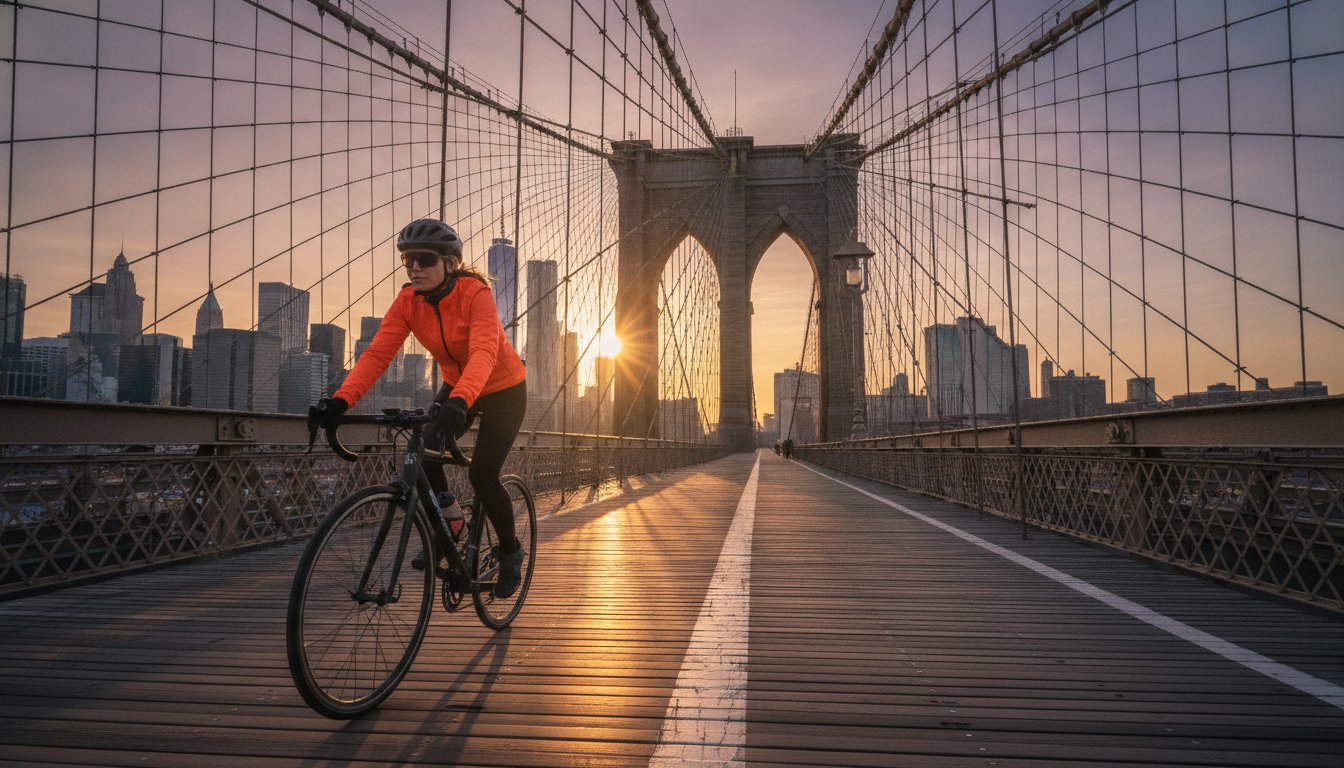
Urban cycling is a vibrant, moving community, and there's no better way to feel the pulse of a city than from behind a pair of handlebars. Whether you're gearing up for a guided bike tour NYC bridges or planning a solo mission through bustling city districts, the sheer scale of urban streets can feel intimidating. We know the feeling of staring at a steep bridge incline or a crowded intersection and wondering if you've actually got everything you need to make it across safely.
You shouldn't have to worry about mechanical failures or getting tangled in a city's traffic regulations while you're trying to soak in the view. At Brooklyn Giro, we've got your back. This guide is your ultimate urban cycling checklist, designed to transform any urban bicycle ride from a stressful commute into an epic adventure. We'll walk you through the essential gear list, break down the safety protocols you need to know, and share the route planning secrets that experienced riders use to navigate the concrete jungle with total confidence. Let's get you ready to ride.
Key Takeaways
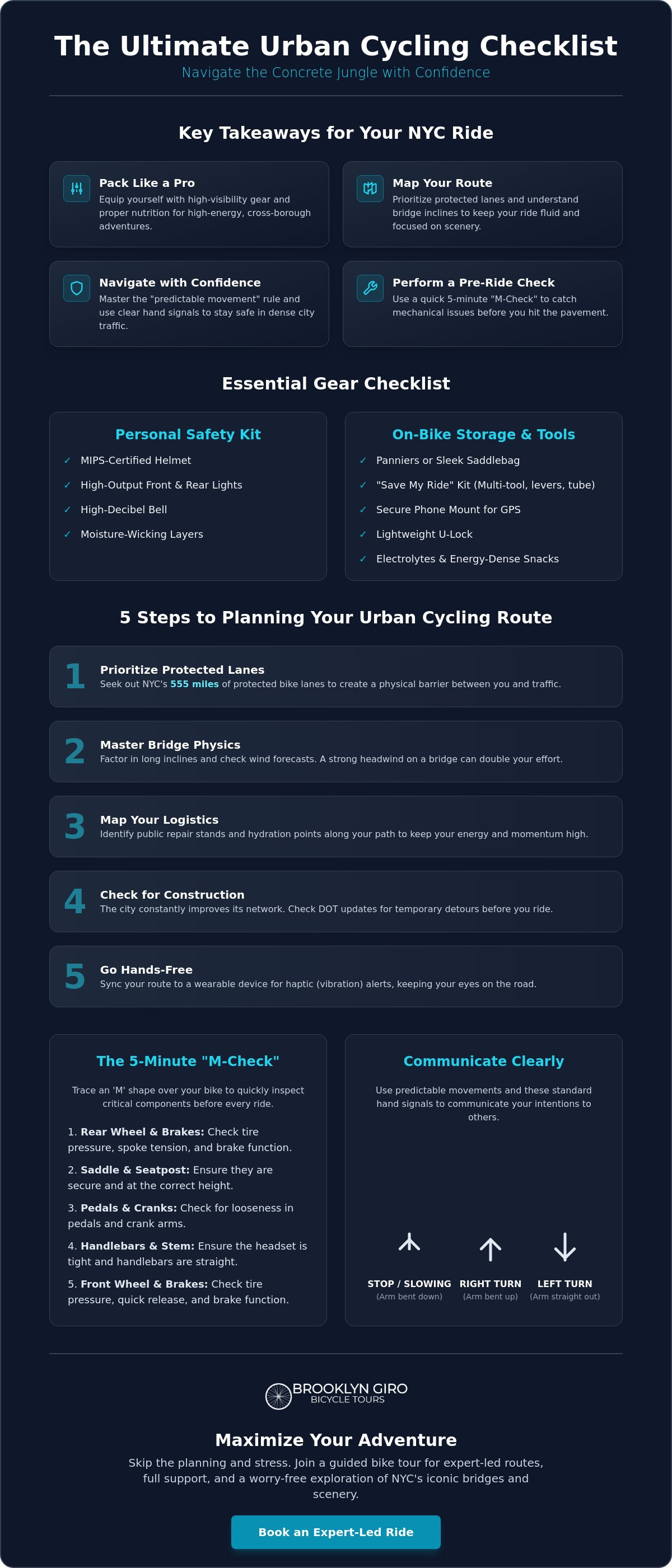
- Pack like a pro with a mandatory checklist for high-visibility gear and the specific nutrition needed for high-energy, cross-borough adventures.
- Map out protected lanes and master bridge inclines to ensure your ride stays fast, fluid, and focused on the iconic scenery.
- Navigate with confidence by learning the "predictable movement" rule and the hand signals that keep you safe in dense city traffic.
- Execute a lightning-fast 5-minute "M-Check" safety inspection to catch mechanical issues before you ever hit the pavement.
- Discover why joining a guided bike tour NYC bridges provides the expert lead and sweep support needed for a worry-free urban exploration.
Essential Gear Checklist for a High-Energy Bicycle Ride NYC
Gear up. New York City doesn't wait for anyone, and your equipment shouldn't either. Whether you are joining a guided bike tour NYC bridges or striking out on your own, having the right kit turns a good ride into a legendary one. You are navigating a massive ecosystem. With over 1,550 miles of pathways in the Cycling in New York City network, being self-sufficient is the name of the game. Preparation isn't just about convenience; it's about maintaining your momentum through five boroughs of high-energy movement.
The Personal Safety Kit
Safety is your foundation. Start with a MIPS-certified helmet. These aren't your average foam hats; they are designed to handle the multi-directional impacts common in urban environments. Don't compromise here. Next, focus on visibility. Even at high noon, the underpasses of the Manhattan or Williamsburg bridges can be surprisingly dark. High-output front and rear lights are mandatory to ensure drivers and other cyclists see you coming. Finally, ditch the polite "excuse me" for a high-decibel bell. In the roar of city traffic, you need a crisp, loud signal to communicate with pedestrians who might step into the bike lane. Dress in moisture-wicking layers to handle the microclimates you'll hit on the open spans of the East River, where the wind can drop the temperature by ten degrees in seconds.
On-Bike Storage Solutions
How you carry your gear changes how you ride. If you're planning a 40-mile trek, weight distribution is everything. Panniers are great for keeping the center of gravity low, which helps immensely when you're grinding up the long inclines of the Queensboro Bridge. If you prefer a lighter setup, a sleek saddlebag can hold your "Save My Ride" kit. This should include a multi-tool, tire levers, and a spare tube. Don't let a simple puncture end your day. We also recommend a secure phone mount. Navigating complex intersections requires hands-free access to your GPS so you can keep both hands on the bars and your eyes on the road. For those quick stops at a local bakery or a scenic photo op, a lightweight U-lock provides the security you need without adding unnecessary bulk to your climb. Pack enough electrolytes and energy-dense snacks to fuel your engine. On a guided bike tour NYC bridges, the pace is brisk, and staying hydrated ensures you finish as strong as you started.
5 Steps to Planning Your Urban Cycling Route
Planning a route through the five boroughs is an art form. With over 1,550 lane miles in the network, you've got plenty of options, but not all paths are created equal. If you're not on a guided bike tour NYC bridges, you'll need to be your own navigator. Success on the streets starts long before you clip into your pedals. You need a strategy that prioritizes flow and minimizes friction. Follow these five essential steps to build a bulletproof itinerary.
- Prioritize protected lanes: NYC currently boasts 555 miles of protected bike lanes. Seek these out to keep a physical barrier between you and vehicle traffic.
- Master bridge physics: Factor in the long, steady inclines of the East River spans. Wind resistance on open bridges can double your effort, so check the forecast for gusts that might turn a casual ride into a workout.
- Map your logistics: Identify public repair stands and hydration points along your path. Knowing exactly where to top off your water bottle keeps your energy levels high.
- Check for construction: The city is set to add 50 miles of new protected lanes in 2026. This means progress, but it also means temporary detours. Check DOT updates before you head out.
- Go hands-free: Sync your final route to a wearable device. Haptic alerts (vibrations on your wrist) tell you when to turn without you ever having to look away from the road.
If you'd rather skip the planning phase and jump straight to the action, you can always book an expert-led ride where the route is already perfected for you.
Leveraging Digital Mapping Tools
Don't just rely on standard GPS. Use heatmaps to see where local riders actually travel; these often reveal safer, more efficient cut-throughs that official maps miss. If you're looking to save your legs for the views, use "avoid hills" filters to skirt around unnecessary elevation. For solo explorers, always use live location sharing features. It's a simple safety layer that lets friends track your progress across the city in real time.
Understanding Terrain Challenges
Urban riding is more than just asphalt. You'll encounter unique expansion joints on the iconic bridges that can jar your wrists if you aren't ready. When you transition into historic areas like DUMBO, prepare for Belgian blocks and cobblestones. Keep your grip loose and your momentum steady to float over the bumps. Sudden elevation changes often happen at borough boundaries, so shift gears early before the incline bites. Mastering these transitions is what separates a novice from a true city cyclist.
Mastering Urban Cycling Etiquette and Safety Laws
Riding in New York City is a team sport. With over 620,000 cycling trips happening every day, the streets are alive with constant movement. The golden rule for staying safe in this high-density environment is predictable movement. Don't make sudden zags or unexpected stops. When you move with intention, you allow the 1.9 million other adult New Yorkers who ride to anticipate your next move. This flow is what keeps the city's energy high and its riders safe.
Communication is your best tool on the road. Master your hand signals before you hit the pavement. A simple left or right arm extension tells everyone your plan, while a hand held down with the palm back signals a stop. Beyond signals, watch the "Door Zone." Always position yourself at least three to four feet away from parked cars. A suddenly opened door is a classic urban hazard, so stay alert and take the lane when necessary to keep your buffer zone intact. If you're riding in a group, call out hazards like glass or potholes to the riders behind you. It's about looking out for the collective experience.
Legal Requirements for Every Rider
New York City laws are designed to keep the gears turning smoothly. If your adventure continues after dusk, you must have a white front light and a red rear light. It's not just a suggestion; it's the law. While many riders enjoy music, remember that you must keep at least one ear open. Total noise cancellation is illegal because you need to hear sirens and bells. Also, keep in mind that e-bikes have a strict 15 mph operating limit on all city streets. Following these rules contributed to a 58% decrease in cyclist fatalities in 2025, proving that smart riding saves lives. Always yield the right-of-way to pedestrians at every intersection and crossing. They are the most vulnerable users of the street, and respecting their space is non-negotiable.
The Social Code of the Streets
The unwritten rules are just as important as the legal ones. When you're on a guided bike tour NYC bridges, you'll notice a specific rhythm to passing. Always pass on the left and give a vocal warning like "on your left" before you move. This prevents pile-ups on narrow bridge paths where space is at a premium. Build mutual respect by making eye contact with drivers and nodding to pedestrians when they give you space. A little courtesy goes a long way in a crowded borough. Finally, practice the "leave no trace" philosophy. Manage your waste and keep our greenways clean so the next rider can enjoy the same pristine views of the skyline. Authentic local experts know that protecting the environment is part of the job.
The Professional Pre-Ride Safety Inspection Checklist
Don't leave your safety to chance. A mechanical failure mid-span on the Williamsburg Bridge is more than a nuisance; it's a momentum killer. Before you set off on your next urban adventure or join a guided bike tour NYC bridges, run through the "M-Check." This 5-minute systematic inspection ensures your machine is as ready for the ride as you are. It's the professional standard for urban riders who value self-reliance over waiting for a rescue. By following the shape of the letter "M," you'll inspect every critical component from the front hub to the rear wheel.
- Tires and Tread: Check for maximum inflation. Soft tires increase rolling resistance and risk pinch flats on city debris. Inspect the tread for small shards of glass or cuts that could cause a blowout.
- Brake Responsiveness: Squeeze your levers hard. They should feel crisp and stop the wheels instantly before the lever touches the handlebar. Ensure pads are aligned with the rim, not rubbing the tire.
- Drivetrain Health: Apply a light coat of fresh lube to your chain. A dry, gritty chain is prone to dropping under the heavy torque required for those steep bridge inclines.
- Security Check: Lift the bike two inches and let it drop. Listen for any rattles or loose bolts that need a quick turn of a wrench.
Systematic Inspection Steps
Start at the front of the bike. Ensure your front hub and quick-release levers are clamped with absolute security. Move your hands to the handlebars and headset. Hold the front brake and rock the bike back and forth; there should be zero play or vibration in the steering column. Finally, lift the rear wheel and run through your gears. You want smooth, immediate transitions. Avoiding "ghost shifting" now prevents a dangerous slip when you're standing on the pedals mid-climb in heavy traffic.
When to Visit a Professional Mechanic
Some issues require a specialist's touch. Spin your wheels and watch them pass through the brake pads. If they wobble from side to side, your wheels aren't "true," which compromises your stability at high speeds. If your brake or shift cables look frayed, they need immediate professional replacement. A seasonal tune-up is a worthy investment in your peace of mind and performance. If you'd rather skip the maintenance and get straight to the adventure, book a spot on one of our guided tours where every bike is maintained to professional standards.
Maximize Your Adventure: The Case for Guided Experiences
Elevate your experience. While solo exploring has its charm, a guided bike tour NYC bridges offers a level of depth and security that's hard to replicate on your own. You aren't just following a map; you're following a team that knows every pothole, every shortcut, and every historic secret hidden in plain sight. This is about maximizing your energy and your time in a city that never stops moving. We take the guesswork out of the gear, the route, and the rules, leaving you with nothing but the thrill of the ride.
Safety is the silent partner of every great ride. When you ride with a professional lead and sweep team, you have experts managing the flow at the front and keeping the group tight at the back. This structure allows you to navigate complex intersections without the anxiety of losing the route or falling behind. It's the difference between fumbling with a phone mount and actually soaking in the iconic skyline views. Plus, local guides often provide access to hidden gems, like a specific waterfront overlook or a local coffee spot, that mass-participation events and solo riders usually bypass.
The Guided Tour Advantage
Navigation stress is a real energy drain. By joining a curated ride, you delegate the logistics to the pros who live and breathe these streets. Our guides share the "insider" stories that bring the neighborhoods to life, moving beyond surface-level facts to the authentic heart of the city. We bridge the gap between being a visitor and being an explorer. Check out our guided bike tours NYC for a curated experience that hits all the right notes and keeps your pulse racing.
Finding the Right Fit
Every cyclist has a different rhythm, and we've built our offerings to match. Finding the right guided bike tour NYC bridges means matching the route to your specific goals. Whether you want a high-octane trek like The Complete Brooklyn Bike Tour or a more focused Brooklyn Bridge bike tour, there's a route designed for your skill level. Timing is also critical for the best experience. We recommend checking the best time to bike Brooklyn Bridge to ensure you avoid the heaviest pedestrian traffic and score those unobstructed views. Preparing for your first high-energy ride with Brooklyn Giro is simple: bring your enthusiasm, follow the checklist we've covered, and let us handle the rest. This isn't just a service; it's an invitation to see the city through the eyes of people who love these streets. Book your adventure today and feel the difference that local expertise makes.
Take the Lane and Own the Streets
You're now equipped with the ultimate urban cycling strategy. From mastering the "M-Check" to navigating the complex etiquette of the East River spans, you have everything needed to turn a standard bicycle ride NYC into a seamless, high-energy journey. Remember that preparation is the key to confidence. When you know your gear is solid and your route is planned for maximum flow, the city's vibrant energy becomes your tailwind rather than an obstacle.
If you're ready to skip the logistics and dive straight into the action, join us for a guided bike tour NYC bridges. We're ranked #1 for high-energy urban exploration because we combine deep neighborhood knowledge with top-rated equipment included in every ride. Our expert local guides don't just show you the way; they share the authentic character of the city while ensuring your safety from start to finish. Don't just watch the city move. Be a part of it. Book Your High-Energy NYC Adventure with Brooklyn Giro! and experience the five boroughs like a true insider. We'll see you on the pavement.
Frequently Asked Questions
Is it safe to go on a bicycle ride nyc if I haven’t ridden in years?
It's absolutely safe to get back in the saddle, provided you start on protected paths. NYC has added 555 miles of protected lanes to help riders feel secure. Joining a guided bike tour NYC bridges is the smartest way to restart because you'll have a professional lead managing the pace and traffic. We focus on building your confidence while navigating the safest corridors in the city.
Do I need a special type of bike for a long urban ride across bridges?
You don't need a high-end racing machine, but a well-maintained hybrid or road bike is ideal. The key is comfort and gear range. Bridges involve long, steady climbs, so ensure your bike has a low enough gear to keep your legs moving without straining. If you're using an e-bike, remember that NYC limits speeds to 15 mph and requires UL-certified batteries for safety.
What happens if my bike breaks down during a major urban ride?
Preparation prevents most issues, but a "Save My Ride" kit is your first line of defense. If you're on your own, knowing how to swap a tube or fix a dropped chain is essential. On a guided bike tour NYC bridges, our team handles the mechanical heavy lifting. We carry the tools and expertise to perform quick roadside repairs, ensuring you stay focused on the adventure rather than a flat tire.
Are helmets legally required for adults in the city?
Adults riding standard bicycles or Class 1 and 2 e-bikes are not legally required to wear a helmet, though we strongly recommend one. However, if you are operating a Class 3 e-bike or working as a delivery cyclist, a helmet is mandatory. Safety data from 2025 shows that smart gear choices significantly reduce injury risks, so we always provide top-rated helmets for every participant on our tours.
How do I avoid the biggest crowds during a popular bike tour?
Timing is everything when you want to own the road. Aim for early morning starts, specifically before 9:00 AM, to beat the heavy pedestrian traffic on the Brooklyn Bridge. Weekdays are generally quieter than weekends. By choosing off-peak hours, you'll secure unobstructed views of the skyline and enjoy a more fluid, high-energy pace without having to dodge large groups of sightseers.
Can children participate in a long-distance urban bicycle ride?
Yes, children can join the fun, but they must follow specific safety laws. Any rider under 14 years old is legally required to wear a helmet in New York City. For younger kids, children between one and five must be in a carrier and wear a helmet. We design our routes to be inclusive, but we recommend choosing a tour that matches your child's stamina and comfort in urban environments.
What should I do if I get separated from my group or the route?
Stay calm and stop at the next safe corner. If you synced your route to a wearable device as we suggested earlier, use the haptic alerts to find your way back to the path. For those on a guided ride, our sweep team is specifically there to ensure no one gets left behind. Always carry a charged phone and share your live location with the group leader before the ride begins.
How do I prepare for the steep inclines on urban bridges?
Mastering the bridges is about momentum and gear management. Shift into a lower gear before you start the incline to keep your cadence steady. Don't wait until your legs are burning to change gears. Stay hydrated and use energy-dense snacks to fuel your climb. With over 28,500 daily trips across the East River bridges, you're in good company; just keep your eyes up and your rhythm consistent.